Understanding industrial rivet applications is essential for manufacturers, engineers, fabricators, and construction professionals who require strong, permanent, and reliable fastening solutions. Rivets have been used for decades because they create secure mechanical joints that resist vibration, heavy loads, and harsh operating environments. Unlike screws and bolts that may loosen over time, rivets form a permanent connection capable of maintaining structural integrity even under continuous stress.
Today, industrial rivet applications extend across numerous industries, including aerospace, automotive manufacturing, construction, railway engineering, shipbuilding, electronics, and heavy machinery production. Modern rivets are available in various designs and materials, allowing manufacturers to select the ideal fastener based on strength requirements, corrosion resistance, installation methods, and operating conditions. Alongside the primary keyword, related search terms such as industrial rivets, permanent fasteners, structural rivets, sheet metal fastening, blind rivets, solid rivets, metal joining solutions, heavy-duty rivets, and mechanical fastening systems naturally contribute to better search visibility while providing valuable information for readers.
Industrial Rivet Applications Across Manufacturing Industries
The importance ofindustrial rivet applicationscan be seen throughout modern manufacturing. Aerospace companies rely heavily on rivets when assembling aircraft fuselages, wings, and internal structural components. Rivets provide lightweight yet exceptionally strong joints capable of withstanding continuous vibration, pressure changes, and varying weather conditions throughout an aircraft's service life. Solid rivets and flush rivets are particularly common because they deliver maximum structural strength while maintaining smooth aerodynamic surfaces.
The automotive industry also depends on industrial riveting for assembling body panels, chassis components, doors, frames, and interior assemblies. Blind rivets are widely used because they allow fast installation when only one side of the material is accessible. Their efficiency helps manufacturers increase production speed while maintaining consistent product quality and structural reliability.
Construction companies use rivets extensively in structural steel fabrication, bridges, metal buildings, staircases, roofing systems, and architectural frameworks. These permanent fasteners create durable connections capable of supporting significant mechanical loads over many years. Railway manufacturers install rivets throughout train structures, railcars, and transportation equipment because riveted joints remain reliable despite constant vibration and repetitive movement.
Shipbuilding and marine engineering represent another major area where industrial rivet applications continue to play an important role. Corrosion-resistant rivets manufactured from stainless steel or aluminum help ensure long-term durability in environments exposed to sal****er, humidity, and changing weather conditions. Industrial machinery manufacturers also depend on rivets for assembling equipment frames, protective panels, mechanical housings, conveyors, and production machinery that require dependable fastening throughout continuous operation.
Rivet Materials Supporting Industrial Performance
The success of various industrial rivet applications depends greatly on selecting the appropriate rivet material. Aluminum rivets are widely used because they combine lightweight construction with excellent corrosion resistance. These characteristics make them ideal for transportation equipment, aircraft interiors, marine components, electronics, trailers, and general sheet metal fabrication where minimizing weight improves efficiency.
Steel rivets provide outstanding mechanical strength and are commonly selected for structural construction, heavy equipment manufacturing, mining machinery, bridges, railway systems, and industrial fabrication projects requiring exceptional load-bearing capacity. Their ability to withstand heavy tensile and shear forces makes them one of the strongest permanent fastening options available.
Stainless steel rivets offer both superior strength and excellent corrosion resistance. They perform exceptionally well in chemical processing plants, pharmaceutical manufacturing, food processing equipment, marine engineering, medical devices, and outdoor industrial installations where moisture and corrosive substances are present. Their long service life helps reduce maintenance requirements and improve equipment reliability.
Copper rivets provide excellent electrical conductivity together with natural corrosion resistance. They are frequently installed in electrical equipment, roofing systems, decorative architectural work, and premium leather products. Brass rivets combine durability with an attractive appearance, making them suitable for furniture manufacturing, marine hardware, decorative metalwork, and luxury consumer products.
Selecting the proper rivet material requires evaluating environmental conditions, operating temperatures, corrosion exposure, mechanical loads, and compatibility with surrounding materials. Proper material selection ensures that industrial riveted joints maintain their strength, safety, and performance throughout the product's operational lifespan.
Riveting Technology Supporting Modern Industrial Production
Modern industrial rivet applications continue to evolve through advances in manufacturing technology and automated assembly systems. High-speed riveting equipment allows manufacturers to achieve consistent installation quality while significantly increasing production efficiency. Automated riveting systems are commonly used in automotive assembly lines, aircraft production facilities, electronics manufacturing plants, and heavy equipment factories where precision and repeatability are essential.
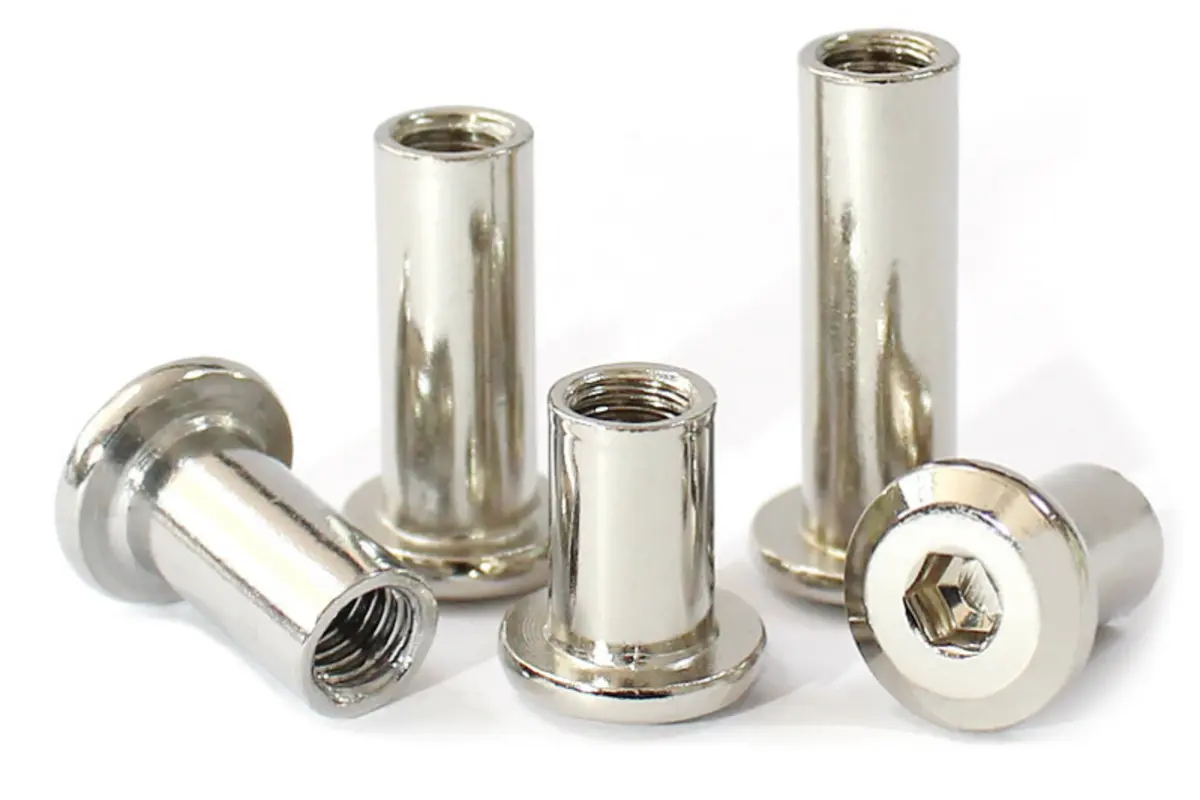
Different rivet designs support different production requirements. Solid rivets remain the preferred solution for structural applications requiring maximum strength, while blind rivets simplify assembly when access is limited to one side of the workpiece. Threaded rivets, also known as rivet nuts, create durable internal threads in thin sheet metal, allowing removable bolts to be installed where conventional threading methods are not practical. Tubular and semi-tubular rivets provide efficient fastening for lightweight mechanical assemblies, furniture, luggage, and consumer products.
Modern protective coatings and improved alloy technology have further expanded the capabilities of industrial rivets. Enhanced corrosion resistance, greater fatigue strength, and improved vibration resistance enable riveted assemblies to perform reliably in increasingly demanding industrial environments. These technological developments continue to improve product quality while reducing maintenance costs and extending equipment lifespan.
Conclusion
Understanding industrial rivet applications is essential for selecting reliable fastening solutions across manufacturing, construction, aerospace, automotive, transportation, marine engineering, and heavy industrial production. Rivets continue to provide one of the most dependable methods of creating permanent mechanical joints capable of resisting heavy loads, continuous vibration, and harsh environmental conditions.
Whether using solid rivets for structural steel fabrication, blind rivets for efficient assembly, flush rivets for aerospace engineering, or threaded rivets for thin sheet metal applications, each fastening solution offers unique advantages for specific industrial requirements. Combined with high-performance materials such as aluminum, steel, stainless steel, copper, and brass, modern rivets deliver exceptional durability, strength, and long-term reliability.
As manufacturing technology continues to advance, industrial rivet applications remain a critical part of modern engineering. Choosing the correct rivet type and material improves structural integrity, enhances workplace safety, increases production efficiency, and extends the service life of industrial equipment and assembled products. For manufacturers seeking dependable permanent fastening solutions, industrial rivets continue to represent one of the most effective and trusted technologies available.