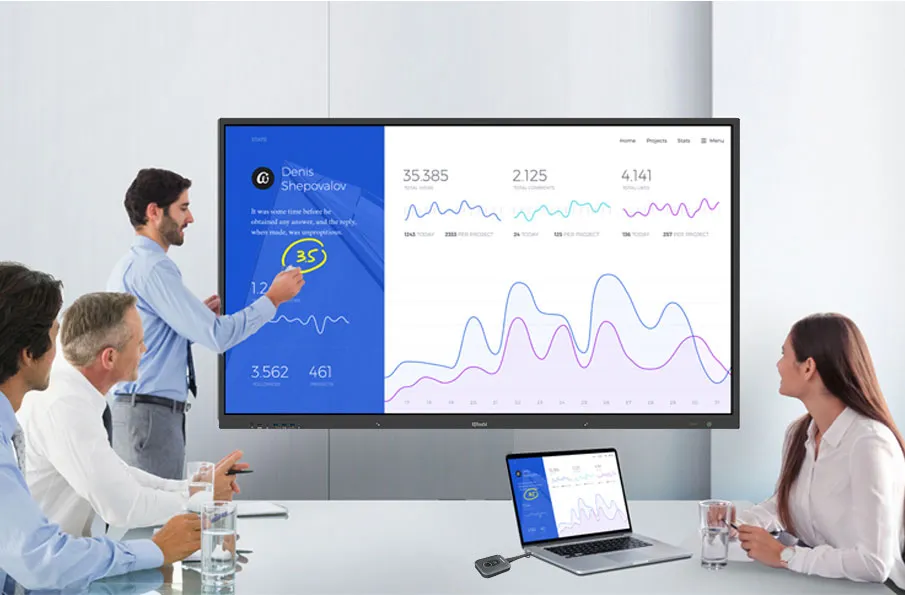
In today’s fast-paced digital environment, the demand for efficient, cable-free communication tools has increased dramatically. A wireless presentation system has become an essential solution for modern workplaces, classrooms, and meeting spaces where seamless collaboration and real-time content sharing are required. This advanced technology allows users to present content directly from laptops, smartphones, and tablets to large displays without relying on traditional wired connections.
As organizations shift toward hybrid work models and digital learning environments, wireless presentation systems are playing a key role in improving communication efficiency. These systems eliminate the limitations of HDMI cables, reduce setup time, and enable smooth content sharing across multiple devices. Whether used in corporate boardrooms, classrooms, or training centers, wireless presentation solutions enhance productivity and create a more interactive experience.
The increasing demand for smart collaboration tools has made wireless presentation systems a core part of modern audiovisual infrastructure. With features like screen mirroring, cloud connectivity, and multi-device support, they are transforming the way people share ideas and present information.
Wireless Presentation System Features and Real World Applications
A modern wireless presentation system is designed to simplify content sharing while enhancing collaboration. It allows users to project presentations, videos, documents, and applications onto large displays without physical connections. This creates a flexible and efficient communication environment in both professional and educational settings.
In business environments, wireless presentation systems are widely used for meetings, client presentations, brainstorming sessions, and corporate training. Employees can instantly connect their devices and share content in real time, making discussions more dynamic and productive. The ability to switch presenters seamlessly ensures smooth meeting flow without technical interruptions.
Educational institutions also benefit significantly from wireless presentation systems. Teachers can deliver interactive lessons by sharing digital content directly from their devices to classroom screens or smart boards. Students can also participate by presenting assignments or collaborating on group projects, which improves engagement and learning outcomes.
Conference centers and seminar halls use wireless presentation systems to manage large-scale events where multiple speakers need to share content efficiently. The flexibility of switching between presenters and devices makes these systems ideal for professional gatherings and workshops.
Healthcare facilities also utilize wireless presentation systems for medical training, diagnostic discussions, and patient education. Doctors and medical staff can display imaging results, reports, and presentations on large screens for better understanding and collaboration.
Wireless Presentation System Technology and Performance
The performance of a wireless presentation system depends on advanced connectivity technologies that ensure smooth and stable data transmission. Most systems use Wi-Fi, Miracast, AirPlay, or proprietary wireless protocols to enable fast and reliable screen sharing between devices and displays.
High-speed network connectivity plays a crucial role in ensuring high-quality video and audio performance. Modern systems support Full HD and 4K resolution, allowing users to present sharp visuals, detailed graphics, and clear text without lag or distortion.
Latency reduction is a key feature of advanced wireless presentation systems. Optimized data compression and real-time synchronization ensure that content appears instantly on the display, making live presentations and interactive discussions more effective.
Security is another important aspect of wireless presentation technology. Encrypted connections, secure pairing methods, and access control features help protect sensitive data during presentations. This is especially important in corporate and government environments where confidentiality is a priority.
Compatibility across multiple platforms is one of the strongest advantages of wireless presentation systems. They support Windows, macOS, Android, and iOS devices, allowing users to connect seamlessly regardless of operating system or device type.
Wireless Presentation System Business and Education Impact
The adoption of wireless presentation systems has significantly improved communication and collaboration in both business and education sectors. In corporate environments, these systems eliminate the need for cable management and reduce setup time before meetings. Employees can instantly share content from their devices, making meetings more efficient and productive.
Remote and hybrid work models benefit greatly from wireless presentation systems. Teams spread across different locations can collaborate in real time while sharing the same visual content, improving communication and decision-making speed. This flexibility supports modern business operations where digital connectivity is essential.
In educational institutions, wireless presentation systems enhance teaching methods by enabling interactive and engaging lessons. Teachers can display multimedia content, educational videos, and digital presentations directly from their devices, making learning more dynamic.
Students also benefit by participating in presentations and collaborative activities. This encourages active learning and improves knowledge retention compared to traditional teaching methods.
Training centers and professional workshops rely on wireless presentation systems to deliver structured and interactive sessions. Participants can share ideas, display content, and engage in group discussions without technical barriers.
Wireless Presentation System Integration and Smart Collaboration
A major advantage of a wireless presentation system is its ability to integrate with modern digital ecosystems. These systems work seamlessly with interactive whiteboards, smart TVs, projectors, and conferencing platforms, creating a unified communication environment.
Many organizations now use integrated meeting room solutions where wireless presentation systems are combined with video conferencing tools and cloud-based collaboration software. This allows users to share content locally while also engaging remote participants in real time.
Interactive displays further enhance collaboration by allowing users to annotate, edit, and interact with shared content during presentations. This creates a more engaging and productive meeting experience.
Cloud integration enables users to access files from online storage platforms and present them instantly without transferring data manually. This improves workflow efficiency and reduces dependency on physical storage devices.
Wireless Presentation System Benefits for Modern Organizations
The benefits of a wireless presentation system extend across multiple industries and use cases. One of the most important advantages is simplicity. Users can connect devices quickly without dealing with cables or adapters, making presentations smoother and more efficient.
Flexibility is another major benefit, as wireless systems support multiple device types and operating systems. This ensures compatibility in diverse environments where different technologies are used.
Productivity improves significantly because meetings and presentations start faster and run more smoothly. Participants can focus more on content rather than technical setup issues.
Collaboration is also enhanced through real-time content sharing. Teams can work together more effectively by viewing and interacting with the same information simultaneously.
Wireless Presentation System Future Development and Innovation
The future of wireless presentation systems is expected to be shaped by advancements in artificial intelligence, cloud computing, and high-speed connectivity technologies. AI-powered features will improve automatic device detection, content optimization, and presentation assistance.
The expansion of 5G networks will enhance wireless presentation performance by providing faster data transfer speeds and lower latency. This will enable smoother real-time collaboration across long distances.
Future systems may also integrate augmented reality and virtual reality technologies, allowing users to create immersive presentation environments for training, education, and business communication.
Cloud-based collaboration platforms will continue to evolve, offering more advanced tools for content sharing, editing, and remote interaction.
Conclusion
A wireless presentation system has become a vital tool for modern communication, enabling seamless content sharing across devices without the need for physical connections. Its applications in business, education, healthcare, and professional environments demonstrate its versatility and importance in today’s digital world.