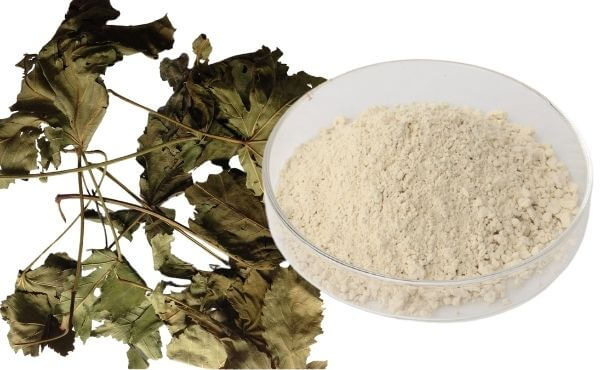
In the crowded world of natural sweeteners, most buyers gravitate toward stevia. But there is another option quietly gaining attention in China's wholesale extract market—sweet tea extract from Rubus suavissimus S. Lee, standardized to rubusoside by HPLC. For supplement and beverage developers looking for a clean-label sweetener with a sugar‑like taste profile, this specification offers something genuinely different.
What Is Rubus Suavissimus?
Rubus suavissimus is a perennial shrub native to southwestern China, particularly the Guangxi region. Its leaves, known locally as "sweet tea" or tian cha, have been brewed for centuries as a naturally sweet beverage. The primary compound responsible for that sweetness is rubusoside, a diterpenoid glycoside that shares structural similarities with steviol glycosides. Unlike many alternative sweeteners that carry lingering bitter or licorice-like aftertastes, rubusoside is widely described as having a clean, sugar-like taste with minimal off‑notes.
From a commercial perspective, rubusoside is exceptionally potent—typically 200 to 300 times sweeter than sucrose, with a caloric value only about 5% that of sugar. This combination of high sweetness and low calorie load makes it highly attractive for sugar reduction applications.
More Than Just Sweetness
While sweetening is the primary driver for commercial use, the leaf contains more than just rubusoside. Research shows Rubus suavissimus leaves are rich in polyphenols, flavonoids, and polysaccharides. Documented properties suggest the extract may help regulate glucose and lipid metabolism, reduce inflammation, and provide anti‑allergy effects. The traditional use has been for conditions ranging from fever to kidney health. These complementary attributes add potential for functional beverage or supplement positioning beyond simple sweetening.
Why HPLC Matters for Rubusoside
For the B2B buyer, the specification "rubusoside by HPLC" is non‑negotiable. High-Performance Liquid Chromatography (HPLC) is the industry‑recognized method for quantifying rubusoside content with precision. A proper HPLC assay typically uses a C18 reverse‑phase column with a methanol‑water mobile phase, generating a clear chromatogram that separates rubusoside from other leaf constituents. Studies have validated HPLC fingerprinting methods specifically for Rubus suavissimus, quantifying rubusoside alongside other marker compounds such as gallic acid, rutin, and ellagic acid. When a Chinese supplier provides a Certificate of Analysis (COA) with an HPLC chromatogram, they offer verifiable data—not a guess.
Available Specifications in the China Wholesale Market
China's sweet tea extract market offers a range of rubusoside concentrations. Most suppliers focus on 70% to 98% rubusoside by HPLC. The sweet tea leaves naturally contain approximately 4–6% rubusoside. Some suppliers also offer a dual‑specification product combining rubusoside with 20–30% polyphenols. While a 20% rubusoside specification does appear in the market, the more common commercial grades begin at 50%.
Practical Verification Checklist
When evaluating a wholesale supplier, the following points are critical:
Request HPLC chromatograms. A COA should include the rubusoside percentage, a chromatogram or retention time data, heavy metals, loss on drying, and microbial counts.
Confirm sweetness profile. Reputable suppliers can provide sweetness multiples (e.g., 70% rubusoside at approximately 140× sucrose, 95% at approximately 200×).
Ask about origin. Many China suppliers grow their own raw material or source from Guangxi and Hunan provinces.
Check certifications. ISO, HACCP, Kosher, Halal, USDA Organic, and non‑GMO are common among established manufacturers.
Review batch consistency. Request three consecutive batch COAs to verify reproducibility.
Applications Across Industries
Rubusoside extract has found broad acceptance in food and beverage systems. It is soluble in water, methanol, and ethanol. Key applications include:
Beverages: carbonated soft drinks, teas, functional waters, and juice drinks
Bakery and confectionery: cookies, chewing gums, and candies
Pharmaceuticals: as a sweetness enhancer or active ingredient
Skincare: emerging applications in cosmetics
Final Thoughts
Sourcing rubusoside extract from China is increasingly straightforward when buyers insist on HPLC verification. The combination of high sweetness, low calories, and functional benefits makes this botanical a compelling option for product developers. The suppliers who provide complete HPLC documentation, disclose origin, and maintain consistent batch records are the ones to prioritize. Insist on the test, and leave the guesswork behind.