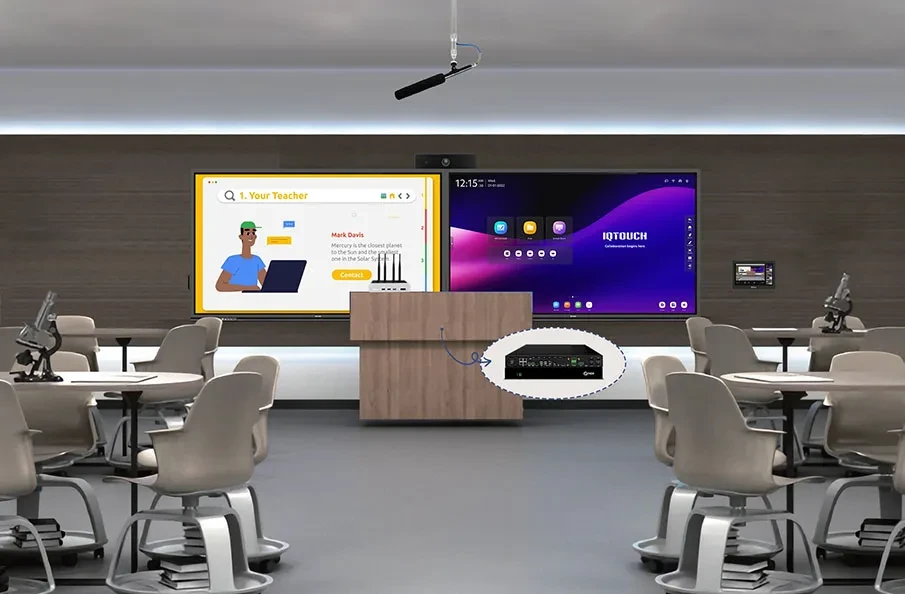
Technology has transformed the way people teach, learn, communicate, and collaborate. Traditional chalkboards and whiteboards are increasingly being supported by advanced digital tools that make information more interactive and accessible. A Smart board is one of the most recognizable technologies in this transformation. By combining a large digital display with touch interaction, multimedia capabilities, and connected learning tools, a Smart board can create a more engaging environment for classrooms, offices, training centers, and other professional spaces.
A modern Smart board can do much more than display information. Teachers can write directly on the screen, open digital lessons, play educational videos, browse websites, display presentations, and interact with applications. Businesses can use smart boards for meetings, brainstorming sessions, presentations, training, and collaborative work. This versatility makes Smart board technology an important part of modern digital environments.
The growing adoption of smart classrooms and interactive learning solutions has increased interest in Smart boards for classrooms, interactive whiteboards, digital teaching boards, and touchscreen displays. These technologies can help organizations replace several traditional presentation tools with a more flexible digital platform.
Smart Board Technology for Modern Learning
A Smart board is an interactive digital board that allows users to display and interact with digital content through touch or other supported input methods. Unlike a traditional whiteboard, a smart board can connect with computers, mobile devices, internet resources, educational software, and other digital platforms.
In education, this technology can change the way teachers present information. Instead of writing everything manually on a conventional board, teachers can prepare digital lessons and display them on a large screen. They can also annotate presentations, highlight important information, draw diagrams, open websites, and use multimedia resources during a lesson.
A smart classroom board can support a variety of subjects. Mathematics teachers can use digital graphs, equations, and visual demonstrations. Science educators can display diagrams, simulations, photographs, and educational videos. Geography lessons can include interactive maps, while language classes can use digital text, audio, and multimedia resources.
The visual nature of a Smart board can also make complex topics easier to present. Teachers can move between different forms of content without having to change physical materials. A single lesson can include text, images, videos, diagrams, presentations, and interactive activities.
Another important feature of interactive board technology is digital annotation. Teachers can write notes directly over documents, presentations, images, or webpages. Depending on the software and device, these annotations can be saved for later use. This can be useful when teachers want to provide students with lesson notes after a class.
Smart boards can also support digital organization. Instead of maintaining separate physical materials for every lesson, educators can store presentations, worksheets, diagrams, and other resources digitally. This can make lesson preparation and content management more convenient.
Smart Board for Classrooms and Student Engagement
Student participation is an important part of effective education, and Smart board technology for classrooms can encourage more active involvement. A traditional lecture may rely heavily on students listening and observing, while an interactive digital environment can give them opportunities to participate directly.
Teachers can invite students to solve problems on the touchscreen, annotate diagrams, answer interactive questions, or present their work to classmates. Depending on the classroom setup, students can also share content from laptops or tablets to the main display.
This creates an interactive classroom where students can become more involved in lessons. Digital content can also provide additional ways to explain concepts. For example, an animation may demonstrate a scientific process more clearly than a static image, while an interactive map can provide more context during a geography lesson.
A Smart board can also support collaborative learning. Several students may work together on a digital activity or project and then present their results to the class. Teachers can guide the activity from the same display while students contribute ideas.
The use of multimedia is another advantage. Educational videos, photographs, diagrams, presentations, digital textbooks, websites, and learning applications can all become part of a lesson. This variety can help teachers create lessons that are more dynamic and adaptable.
For schools and universities, Smart boards for education can also support hybrid learning. When combined with video conferencing and screen-sharing technology, teachers can communicate with students who are participating remotely. Digital classroom tools can therefore support both traditional and modern learning environments.
However, technology should support teaching rather than replace good instruction. The effectiveness of a Smart board depends on how educators use it. Proper teacher training is important because a sophisticated digital board will only provide value when teachers understand its features and integrate them into meaningful lessons.
Smart Board for Business Meetings and Collaboration
The use of a Smart board is not limited to education. Businesses are increasingly using interactive digital boards in conference rooms, training centers, offices, and collaborative workspaces. The touchscreen functionality can make meetings more engaging by allowing participants to interact directly with information.
During a business presentation, an employee can display charts, reports, websites, presentations, documents, and other materials on the smart board. Important information can be highlighted or annotated during the discussion. Instead of simply showing a presentation, the meeting can become a collaborative session.
Smart boards are also useful for brainstorming. Teams can use digital whiteboard applications to write ideas, create diagrams, organize concepts, and plan projects. Digital notes can often be saved and shared, allowing employees to continue working with the information after the meeting ends.
Interactive smart boards for business can also support wireless presentation systems. Employees can potentially share content from laptops, tablets, or smartphones without repeatedly connecting physical cables. This can make it easier for multiple participants to contribute to a meeting.
Hybrid workplaces can benefit from smart board technology as well. When an interactive board is integrated with video conferencing software, employees in different locations can communicate while viewing shared content. This can help create a more connected experience for remote and in-person participants.
Training departments can also use digital smart boards to conduct workshops and employee education. Trainers can display instructional material, demonstrate software, annotate documents, and interact with participants. The same technology can be used for seminars, presentations, and professional development sessions.
Organizations should consider network reliability, software compatibility, data security, technical support, and user training when implementing smart board technology. These factors can influence the overall performance and usability of the system.
Choosing a Smart Board?
Selecting the right Smart board requires careful consideration of the environment and intended use. A school classroom may need different features from a corporate conference room, so organizations should focus on practical requirements rather than choosing technology based only on appearance or the number of features.
Screen size is an important consideration. A board should be large enough for everyone in the room to see text, images, presentations, and other content clearly. Larger classrooms and conference rooms may require larger interactive displays, while smaller spaces can use more compact solutions.
Touch responsiveness is another important feature. Users should be able to write, draw, select objects, and navigate applications smoothly. Multi-touch functionality can be especially useful when multiple users need to interact with content at the same time.
Connectivity also matters. Modern users may need to connect laptops, smartphones, tablets, wireless presentation systems, cameras, and other devices. A Smart board with wireless connectivity can provide greater flexibility and reduce dependence on physical cables.
Display quality should also be considered. High-resolution screens can make text, graphics, photographs, and videos clearer. This is particularly important in classrooms and meeting rooms where users may be sitting at different distances from the screen.
Software support is equally important. A Smart board should work effectively with the applications and platforms used by the organization. Schools may need educational software and digital learning tools, while businesses may prioritize presentation, collaboration, and video conferencing applications.
Long-term support should not be overlooked. Organizations should evaluate maintenance requirements, software updates, warranty coverage, durability, and technical assistance. Choosing a reliable system can help ensure that the investment remains useful over time.
Conclusion
ASmart board can transform traditional classrooms, meeting rooms, and collaborative spaces by combining digital content with interactive touchscreen technology. In education, it can help teachers deliver multimedia lessons, annotate content, encourage student participation, and create more engaging learning experiences. In business environments, it can support presentations, brainstorming, training, meetings, and hybrid collaboration.
The growing popularity of smart classroom technology, interactive whiteboards, digital teaching boards, and touchscreen displays reflects the increasing importance of technology in modern communication and education. However, the value of a Smart board depends on more than its hardware. Effective implementation also requires appropriate software, reliable connectivity, teacher or employee training, and a clear understanding of how the technology will be used.