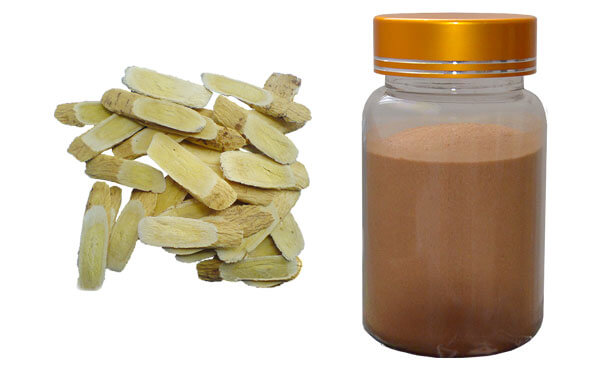
In the world of botanical extracts, certain compounds emerge from the shadow of the whole herb to take center stage in their own right. Such is the case with Astragaloside IV, a bioactive saponin derived from the root of Astragalus membranaceus (Huang Qi). While the root itself has been a cornerstone of traditional wellness practices for centuries, modern science has isolated and focused on this specific molecule for its remarkable biological properties.
As global interest in standardized, efficacious natural ingredients grows, Astragaloside IV has become a sought-after commodity. For manufacturers and formulators, sourcing this compound from China—the epicenter of Astragalus cultivation and processing—requires a nuanced understanding of what lies behind the specification sheet. This article explores the science, the applications, and the sourcing landscape for this increasingly important ingredient.
The Molecule Itself: A Marker of Quality
Astragaloside IV (C₄₁H₆₈O₁₄) is a tetracyclic triterpenoid saponin and is widely recognized as one of the most significant bioactive markers in Astragalus root . Its importance is underscored by its inclusion in major pharmacopoeias. For instance, the European Pharmacopoeia specifies that the dried root of Astragalus mongholicus should contain not less than 0.04% Astragaloside IV, establishing it as a critical standard for raw material quality .
In its purified form, Astragaloside IV presents as a white to light yellow crystalline powder . Its physicochemical properties are important for formulators to understand. It has a molecular weight of approximately 785 g/mol and demonstrates good solubility in solvents like methanol, ethanol, and DMSO, though it is practically insoluble in low-polarity organic solvents . This solubility profile dictates how the ingredient is best incorporated into various product matrices, from dietary supplements to topical formulations.
A Spectrum of Biological Activity
The scientific community's interest in Astragaloside IV has intensified, with a growing body of research exploring its therapeutic potential. A comprehensive review of in vivo studies highlights its anti-inflammatory, antioxidant, antitumor, and neuroprotective effects . This positions it as a promising candidate for addressing complex health challenges.
Cellular Defense and Organ Protection
One of the most active areas of investigation is the hepatoprotective role of Astragaloside IV. Research indicates it may help protect the liver through multiple mechanisms, including reducing oxidative stress, inhibiting inflammatory responses, and even suppressing the proliferation of hepatocellular carcinoma cells . These effects are mediated through key molecular pathways such as Nrf2/HO-1 and NF-κB, demonstrating the compound's ability to interact with fundamental biological processes .
Cardiovascular and Immune Support
Astragaloside IV has also been studied for its cardiovascular protective properties . Its ability to modulate immune function adds another layer to its therapeutic profile, making it a versatile component in formulations aimed at overall wellness and resilience . The compound's active form, cycloastragenol, has even garnered attention for its potential to activate telomerase, an enzyme associated with cellular aging .
Anticancer Properties
The anticancer potential of Astragaloside IV is particularly compelling. Studies have demonstrated its ability to reduce the proliferation, migration, and viability of various cancer cells, including those found in breast, lung, colon, and liver cancers . It appears to work by inducing apoptosis (programmed cell death) and modulating key signaling pathways like PI3K/AKT/mTOR. Importantly, it may also enhance the effect of chemotherapeutic agents and help overcome drug resistance .
The Chinese Supply Chain: A Landscape of Specialization
China's dominance in the Astragaloside IV market is not merely a matter of raw material availability; it is the result of a sophisticated, regionalized supply chain that combines traditional agriculture with advanced extraction technologies .
Regional Hubs of Expertise
Different provinces in China have developed distinct capabilities in the production of Astragalus extracts:
Shaanxi Province is renowned for its research-intensive biotech corridor, particularly around Xi'an. Suppliers in this region often specialize in high-purity extracts and maintain GMP-certified facilities capable of producing precise Astragaloside IV concentrations for R&D-focused buyers .
Hunan Province, anchored by Changsha, excels in cost-effective bulk processing. Its strength lies in consistent output volumes and robust domestic supply chains .
Guangdong Province prioritizes speed-to-export and finished product manufacturing, often catering to international brands seeking turnkey solutions like private-label capsules .
This vertical integration across regions—from cultivation to encapsulation—enhances batch traceability and reduces reliance on third-party contractors .